What Actually Happens When Invisalign Slowly Shifts Your Teeth Into Alignment
Clear aligners apply gentle, controlled pressure to specific teeth, gradually moving them through planned stages. Each set is slightly adjusted from the previous one, allowing bone and gum tissue to adapt over time. This steady process improves alignment without wires, using precise digital planning for predictable, comfortable tooth movement.
Understanding "How does Invisalign work?" shows that treatment relies on a sequence of custom trays designed from a 3D scan. Each aligner shifts teeth incrementally, guided by a digital roadmap. Consistent wear ensures continuous pressure, helping teeth reach their final position safely, efficiently, and with minimal discomfort throughout treatment.
Why are Invisalign aligners changed so frequently?
Aligners are changed every one to two weeks because each set is designed to create only a small movement. Once the teeth adapt to that position, a new aligner continues the process.
This is where the query "How does Invisalign work?" becomes easier to understand in practical terms. Each tray is a slightly adjusted version of the last one, ensuring movement stays controlled and predictable rather than sudden or forceful.
At Distinctive Dental Service, we monitor these stages to ensure the teeth are tracking correctly with the treatment plan.
What is happening inside your mouth as teeth shift?
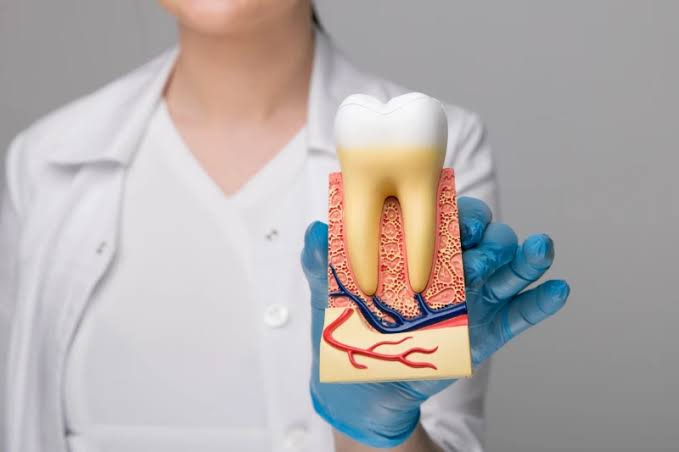
Teeth move through a biological process where pressure causes bone to reshape around the tooth root. This allows teeth to shift safely into new positions over time.
When patients ask, "How does Invisalign work?" so effectively, it is because it uses this natural response in a controlled way. Instead of applying continuous force like traditional braces, Invisalign uses staged pressure that gives tissue time to adapt between aligner changes.
We often explain this to patients so they understand that movement is gradual, stable, and designed for long-term comfort.
How does Invisalign work for different alignment issues?
Invisalign can address many common orthodontic concerns, such as crowding, spacing, and mild bite misalignment. It is most effective when cases are selected appropriately based on clinical evaluation.
In real treatment planning, Invisalign work depends on the complexity of the movement required. Simple cases may finish faster, while more detailed corrections take longer and require more aligner stages.
Each case is mapped individually, so no two treatment plans are exactly the same.
Does Invisalign cause discomfort during tooth movement?
Some mild pressure is normal when switching to a new aligner. This sensation usually lasts a few days and is a sign that teeth are responding to the planned movement.
Many patients are surprised to ask, "How does Invisalign work?" without significant pain compared to traditional braces. There are no wires or tightening appointments, which reduces irritation and emergency visits.
At Distinctive Dental Service, we remind patients that mild pressure is expected and temporary.
Frequently Asked Questions
How does Invisalign work to straighten teeth without metal braces?
Invisalign uses a series of clear, removable aligners that apply gentle pressure to shift teeth gradually. Each aligner is slightly adjusted from the previous one, guiding teeth into alignment over time without wires or brackets.
How long does it take to see results with Invisalign?
Most patients notice small changes within a few weeks. Visible improvements often appear within 6–10 weeks, depending on case complexity and how consistently aligners are worn each day.
Can Invisalign fix all types of teeth alignment problems?
Invisalign can treat many mild to moderate issues, such as spacing, crowding, and minor bite concerns. Complex jaw or severe bite problems may require additional orthodontic approaches.
What happens if I don’t wear Invisalign aligners enough?
Not wearing aligners for the recommended 20–22 hours a day can slow progress and affect results. Teeth may not move as planned, which can extend overall treatment time.
"How does Invisalign work?" after treatment is finished?
After active treatment, retainers are used to maintain alignment. Teeth naturally tend to shift over time, so retention helps preserve results and keep the smile stable long term.
Conclusion
Invisalign works through a carefully structured sequence of clear aligners that guide teeth step by step into better alignment. Many patients first wonder, "How does Invisalign work?", and the answer lies in these staged, custom-designed trays that apply gentle, controlled pressure.
Each stage works with the body’s natural ability to adapt. With consistent wear and proper monitoring, the process delivers predictable, stable, and long-term alignment results without the need for traditional braces.